Prevent workplace discrimination with confidential reporting
- Secure and confidential reporting for employees and third parties
- Structured case management with clear roles and oversight
- Audit-ready documentation to support internal investigations
- Fast implementation with minimal IT or internal resources required

Why organizations choose Whistlelink
- Designed for HR, Legal, Compliance, and Ethics teams
- Used across industries and organizational sizes
- Built to support confidentiality, trust, and accountability
- Easy to deploy and scale across the organization
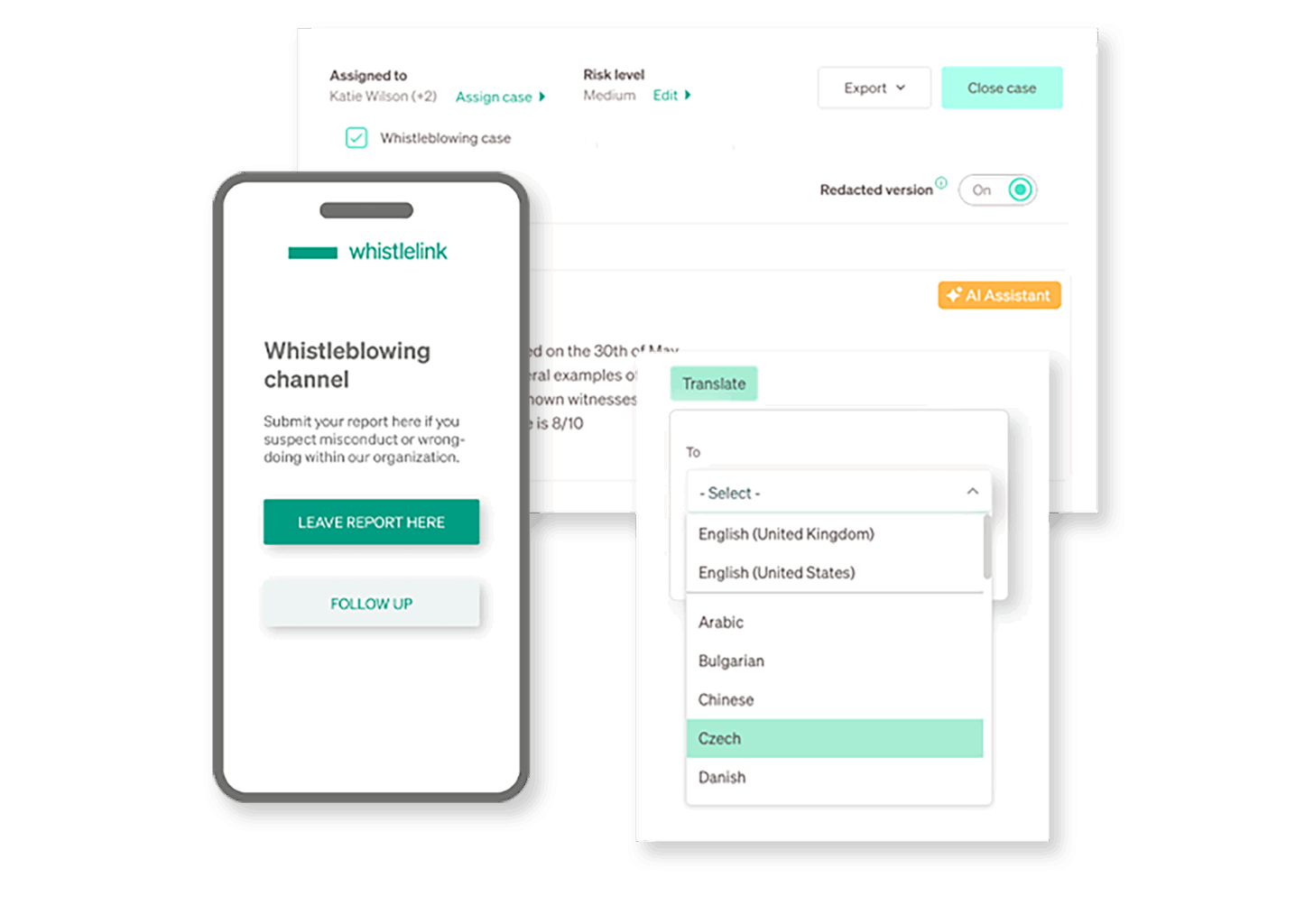
Why preventing workplace discrimination requires secure reporting
Discrimination often goes unreported when employees fear retaliation, feel uncertain about what qualifies as discrimination, or lack trust in internal processes. This can include concerns related to age, gender, disability, race, religion, sexual orientation, or other protected characteristics. Informal or unclear reporting paths can discourage reporting and make consistent handling difficult.
A secure reporting system allows concerns to be raised confidentially, investigated fairly, and documented clearly – helping organizations identify issues early, reduce legal and reputational risk, and demonstrate responsible workplace practices.
For HR and people teams
HR teams play a central role in prevention, fair handling, and consistent outcomes. Whistlelink supports structured and confidential case management for discrimination-related concerns - helping HR teams act early, handle cases responsibly, and maintain trust across the organization.
- Offer a safe way for employees to raise concerns, including anonymous reporting
- Manage sensitive cases with confidentiality, care, and consistency
- Support fair investigations with clear documentation and follow-up
- Handle personal data responsibly in line with applicable U.S. privacy expectations


For compliance and risk teams
Compliance and risk teams rely on consistent processes and clear documentation to strengthen internal controls and governance. Whistlelink provides a structured system for oversight, accountability, and defensible decision-making.
- Enable reporting beyond informal channels or shared inboxes
- Document how reports are received, assessed, and resolved
- Support internal reviews and organizational governance
- Identify trends and risk areas to inform preventive action
For leadership and executives
Leadership commitment is essential to building fair and inclusive workplaces. Executives need visibility into risk areas while maintaining confidentiality, trust, and appropriate oversight.
- Demonstrate commitment to fairness and equal treatment
- Gain insight into organizational trends and patterns
- Strengthen accountability and responsible leadership
- Support long-term cultural improvement across teams and locations

Workplace discrimination - by the numbers
Insights from U.S. workforce research on discrimination, bias, and reporting behavior.
Sources: Gallup U.S. workplace polls; Pew Research Center surveys; Society for Human Resource Management (SHRM) / EEOC reporting behavior research.
say they personally experienced or witnessed workplace discrimination - including unfair treatment based on age, gender, race, disability, or other personal characteristics.
of employees who experience workplace discrimination formally report it - often due to fear of retaliation, lack of trust in internal processes, or uncertainty about reporting options.
believe discrimination against people of a different race, ethnicity, or gender is widespread at their workplace.
Let's talk!
Want to strengthen your organization’s approach to preventing workplace discrimination and supporting a fair workplace?
Let’s explore how Whistlelink can help you enable secure reporting and handle concerns responsibly and consistently.

Maria Boboc