Reporting channels are the methods organizations provide for employees and external stakeholders to report concerns. These channels ensure that individuals can raise issues safely, confidentially, and in line with regulatory requirements. In practice, reporting channels are a core part of a modern whistleblowing system, enabling secure intake, communication, and follow-up.
Why reporting channels matter
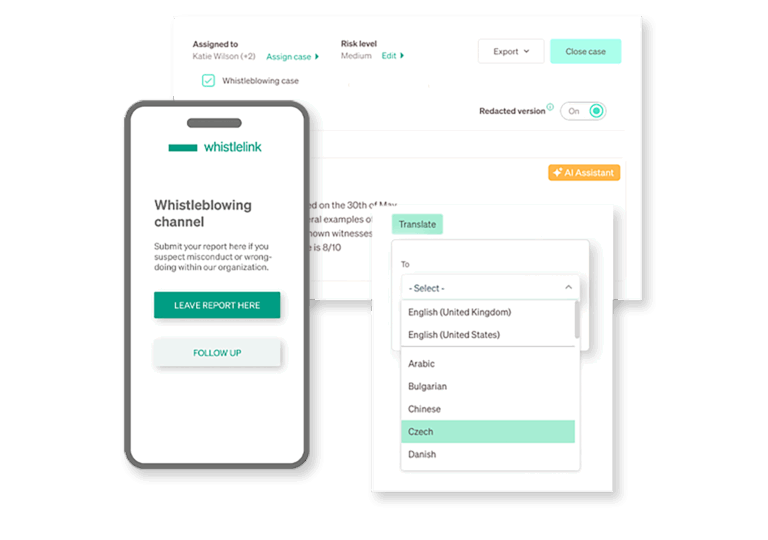
Whistlelink helps organizations implement secure whistleblowing solutions that support written, anonymous, and oral reporting.
Whether you are setting up internal reporting channels for compliance or improving an existing process, the goal is the same: to provide a safe, structured, and trusted way to report concerns and manage cases effectively.
Organizations should offer multiple reporting channels to ensure accessibility and flexibility. Different individuals may prefer different ways of reporting concerns.
Reporting channels provide a structured way to receive, manage, and follow up on reports. A well-designed setup ensures that all reports are handled securely, consistently, and efficiently.
In modern solutions, all reporting channels are typically managed within one unified system, allowing organizations to streamline workflows and maintain full oversight.
Reporting channels are most effective when combined into one unified solution. Organizations should offer multiple options — including written, anonymous, and oral reporting — to ensure accessibility and trust.
By managing all reporting channels within a whistleblowing system, organizations can ensure secure communication, consistent case handling, and structured follow-up across all reports.
Frequently asked questions
Learn more about whistleblowing software, internal reporting, anonymous reporting, and hotline options.
What are reporting channels in a whistleblowing system?
Reporting channels are the different ways individuals can report concerns, such as written, anonymous, or oral reporting. They are a key part of a whistleblowing system and ensure accessibility, confidentiality, and compliance.
What types of reporting channels should organizations offer?
Organizations should offer a combination of written, anonymous, and oral reporting channels to ensure that individuals can choose the method they are most comfortable with.
Who can use reporting channels?
Reporting channels can be used by employees, contractors, suppliers, and other external stakeholders who need a safe way to report concerns related to the organization.
Are reporting channels required by law?
In many jurisdictions, organizations are required to provide secure reporting channels as part of whistleblowing regulations. Requirements may vary depending on location and organization size.
How do reporting channels support compliance?
Reporting channels help organizations meet legal requirements by providing secure ways to receive reports, protect confidentiality, and ensure proper follow-up and documentation.
Can reporting channels be anonymous?
Yes. Many reporting channels support anonymous reporting, allowing individuals to report concerns without revealing their identity while still enabling follow-up communication.
Let's talk
Looking for a whistleblowing system or have questions about pricing or features? Book a free demo and let us help you find the right solution for your organisation.
For confidentiality and data protection reasons, do not share personal data or details relating to specific whistleblowing cases. Submissions containing such information will be deleted.
Contact us
Nice to meet you!
Get in touch
Our team would like to offer you a free demo of Whistlelink. Please select a suitable time in our calendar.
Our team is ready to answer your questions. Find the answer by visiting our support centre, or fill out the form below and we'll be in touch as soon as possible. Or simply give us a call!