Anonymous Reporting
What is anonymous reporting?
Anonymous reporting allows employees and external stakeholders to report concerns without revealing their identity. A well-designed solution enables secure two-way communication, ensuring organizations can follow up on reports while maintaining full confidentiality. In practice, anonymous reporting is a key part of a modern whistleblowing system.




Why anonymous reporting matters
Whistlelink helps organizations implement secure whistleblowing solutions that support written, anonymous, and oral reporting. Whether you are setting up internal reporting channels for compliance or improving an existing process, the goal is the same: to provide a safe, structured, and trusted way to report concerns and manage cases effectively.
- Encourage more people to report concerns
- Protect individuals from retaliation
- Build trust across the organization
- Support compliance with whistleblowing regulations
How anonymous reporting works
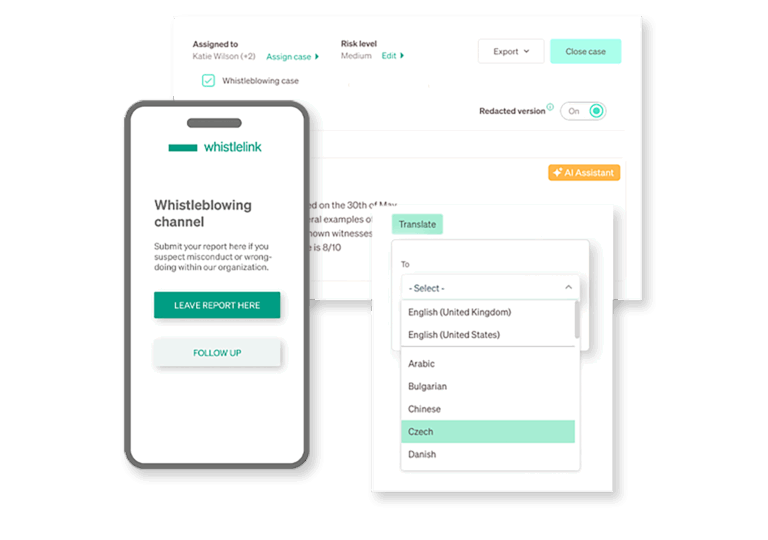
Anonymous reporting systems allow individuals to submit reports without sharing personal information. Secure communication channels enable organizations to ask follow-up questions while maintaining anonymity.
- Secure submission through digital reporting forms
- Anonymous dialogue via encrypted messaging
- Structured follow-up and case management
Key features of anonymous reporting solutions
Anonymous reporting is one of several reporting channels organizations should offer. A complete setup typically includes written, anonymous, and oral reporting options.
- Anonymous and confidential reporting
- Secure communication and data handling
- Role-based access and permissions
- Full audit trail and documentation

Anonymous reporting as part of a broader setup
Anonymous reporting is one of several reporting channels organizations should offer to ensure accessibility, trust, and compliance.
While anonymity plays a critical role in encouraging individuals to speak up, it is most effective when combined with other reporting options. A complete setup typically includes written, anonymous, and oral reporting channels — giving individuals the flexibility to choose how they report concerns.
These channels are typically managed within a unified whistleblowing system, ensuring secure communication, consistent handling, and structured follow-up across all reports.

Frequently asked questions
Learn more about whistleblowing systems, reporting channels, anonymous reporting, and hotline options.
What is anonymous reporting?
Anonymous reporting allows individuals to report concerns without revealing their identity, while still enabling secure two-way communication and follow-up. It is a key component of a modern whistleblowing system, helping organizations encourage reporting while protecting individuals.
Can anonymous reporting be trusted?
Anonymous reporting can be highly reliable when implemented through a secure and well-designed system. Modern solutions protect identities, enable confidential communication, and support structured follow-up — ensuring that reports can be investigated effectively without compromising the reporting person.
Can one solution support both written and oral reporting?
Yes, a comprehensive whistleblowing solution can support both written and oral reporting. This allows organizations to offer multiple reporting channels that suit different preferences and compliance requirements.
What is case management in a whistleblowing solution?
Case management refers to the process of handling, investigating, and following up on reported concerns within a whistleblowing system. It ensures that every report is properly documented, assigned, and resolved in a structured way.
Why is anonymous reporting important?
Anonymous reporting lowers the barrier to speaking up. It provides a safe and confidential way for employees and external stakeholders to report concerns, especially in situations where there may be fear of retaliation or loss of privacy.
How does anonymous reporting work?
Anonymous reporting systems allow individuals to submit reports without sharing personal information. The system then enables secure, two-way communication so organizations can ask follow-up questions and manage the case while maintaining full anonymity.
Can organizations follow up on anonymous reports?
Yes. Modern anonymous reporting solutions support secure two-way communication, allowing organizations to ask questions, request clarification, and manage follow-up while preserving the reporting person’s anonymity.
Who can use anonymous reporting?
Anonymous reporting can be used by employees, contractors, suppliers, and other external stakeholders who need a safe and confidential way to report concerns related to an organization.
Let's talk
Looking for a whistleblowing system or have questions about pricing or features? Book a free demo and let us help you find the right solution for your organisation.