Operating in the EU means your organization needs a secure, confidential channel for employees and third parties to raise concerns – plus clear follow-up timelines and audit-ready documentation. This guide breaks down what the EU Whistleblower Protection Directive requires and how to meet it in practice.
EU REQUIREMENTS FOR US COMPANIES — AT A GLANCEEU Whistleblower Directive requirements - explained for US teams
If you have 50+ employees in the EU (and in some cases for certain public entities), you need an internal reporting channel with defined timelines, confidentiality safeguards, and documented follow-up.
Protect confidentiality for reporters and anyone named in a report
Acknowledge receipt within 7 days
Follow up and respond within 3 months
Assign clear owners and role-based access for case handling
Offer written reporting and, where required, verbal/phone options
Maintain privacy protections and secure documentation end-to-end
Each EU member state enforces this through national legislation. While the core requirements remain the same, the specific penalties and reporting procedures may vary by country.
KEY REQUIREMENTSWho’s protected - and what can be reported?
Who can raise a concern?
Anyone who learns about work-related misconduct can submit a report. Under the EU Whistleblower Directive, protection can include employees, former employees, job applicants, contractors, suppliers, and others connected to the work relationship.
What types of misconduct can be reported?
Reports can cover breaches of EU law across areas such as:
Money laundering and tax violations
Product and transport safety
Data privacy and information security
Public health and consumer protection
Animal welfare
Environmental protection
Protection against retaliation
Individuals who report through the designated channel are protected from retaliation. Protection generally applies when the reporter had reasonable grounds to believe the information was true at the time of reporting.
RISK & ENFORCEMENTWhat happens if you don’t comply?
The EU Whistleblower Directive sets baseline requirements, but enforcement and penalties are handled by each EU member state. In practice, scrutiny often focuses on organizations that:
Discourage reporting (e.g., block access to reporting channels or create obstacles to report)
Breach confidentiality by revealing a reporter’s identity without authorization
Retaliate against people who raise concerns (e.g., termination, demotion, harassment, discrimination)
Non-compliance can lead to fines, civil liability, and reputational damage – especially if issues escalate to regulators or courts. A well-designed reporting program helps reduce risk and demonstrate good-faith compliance.
HOW TO COMPLY6 essential steps to meet EU whistleblowing requirements
If you operate in the EU, these six steps help you meet the directive’s core requirements—without overcomplicating your program.
Acknowledge and follow up on time
Confirm receipt within 7 days and provide feedback within 3 months. Set clear internal SLAs so nothing falls through the cracks.
Handle reports in line with EU privacy rules
Use a secure process for personal data, limit access by role, and keep a clear record of how information is handled and stored.
Set up secure reporting
Offer a confidential channel with strong access controls and an audit trail – so reports stay protected from intake to closure.
Offer multiple ways to report
Provide written reporting online, and enable verbal reporting by phone or voice message. Offer in-person meetings when requested.
Assign clear ownership
Designate a responsible owner or team to manage intake, communication, investigations, and documentation through resolution.
Make the channel easy to access
Ensure the reporting channel is available to employees and relevant third parties (e.g., suppliers and contractors) and easy to find and use.
Choosing the right reporting solution
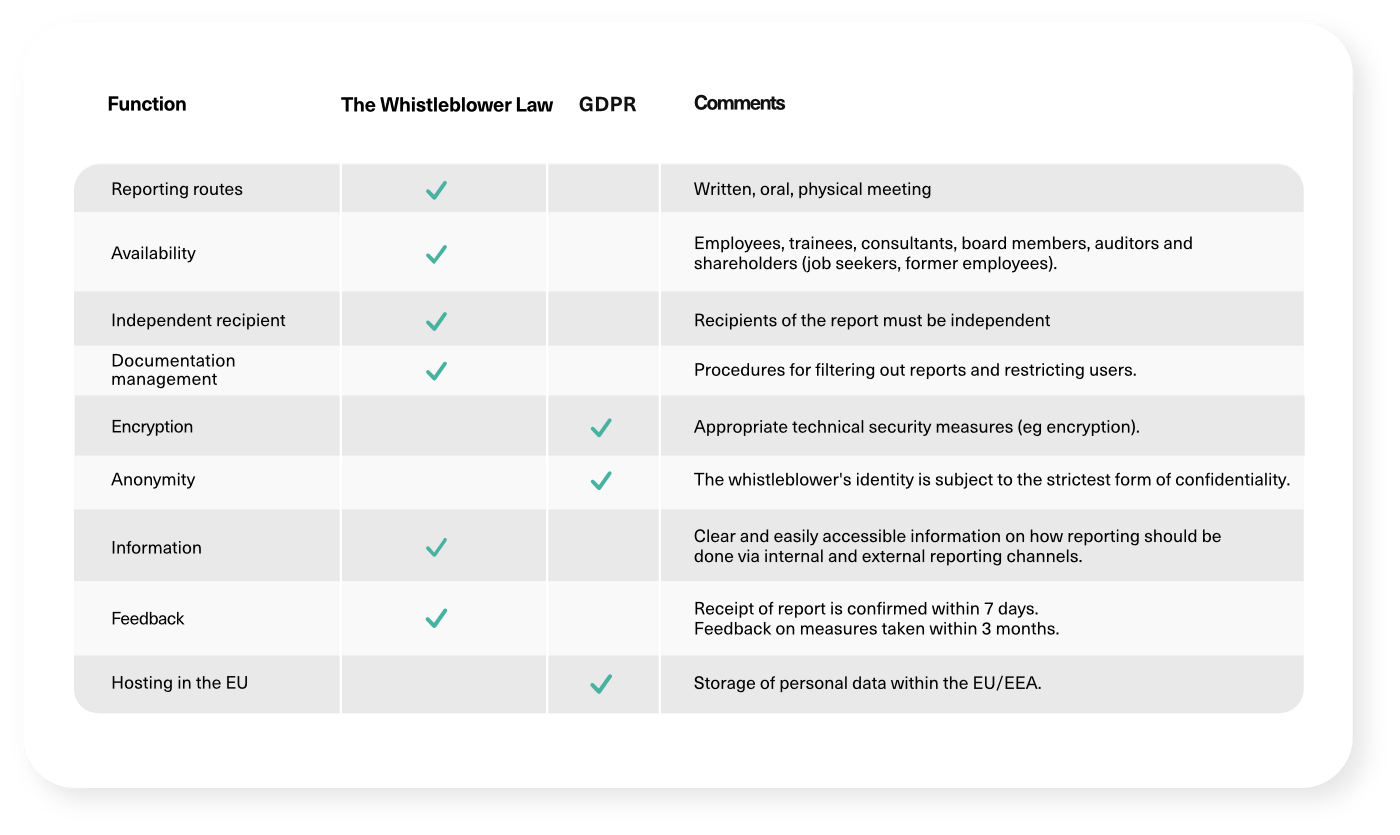
If your U.S. company operates in the EU, your reporting channel needs to meet the EU Whistleblower Directive requirements – plus EU privacy and security expectations.
Whistlelink gives you a practical, easy-to-launch solution for EU operations. Use the checklist below to confirm your setup covers the key legal and technical requirements.
Simple, compliant, and ready in minutesThe only software you need for your whistleblowing hotline
EU Whistleblowing Directive & ComplianceFrequently asked questions
What is whistleblowing?
Whistleblowing is the act of reporting illegal, unethical, or harmful behavior within an organization—whether public, private, or government. Common concerns include fraud, corruption, harassment, discrimination, safety violations, and environmental risks. Whistleblowing systems allow individuals to speak up safely and responsibly.
What protections do whistleblowers have under EU law?
Under the EU Whistleblowing Directive (2019/1937), whistleblowers are protected from retaliation—including termination, demotion, harassment, or other forms of discrimination—when they report breaches of EU law.
Protected areas include:
Financial services, money laundering, and terrorist financing
Public procurement and health
Product, food, and transportation safety
Data privacy and consumer protection
Environmental and radiation safety
Animal welfare and public health
IT and cybersecurity (network and information systems)
To receive protection, whistleblowers must act in good faith and use internal or official reporting channels.
What are employers' responsibilities under the EU Whistleblowing Directive?
Companies operating in the EU with 50+ employees must establish secure and confidential internal reporting channels. These channels must:
Guarantee whistleblower confidentiality
Be accessible to both employees and external stakeholders (e.g. suppliers or contractors)
Be managed by a designated individual or team
Allow written and/or verbal reporting
Comply with EU data protection laws (GDPR)
Why was the EU Whistleblowing Directive introduced?
The directive was enacted to strengthen protections for whistleblowers, prevent corruption, and promote transparency within organisations. It creates a uniform legal framework across EU member states, helping to ensure ethical business practices and public trust.
How can U.S. companies ensure compliance with the directive?
U.S.-based companies with operations, subsidiaries, or employees in the EU must implement a secure whistleblowing system that meets the directive’s requirements. This includes:
Providing secure and confidential reporting channels
Meeting GDPR data privacy standards
Acknowledging reports within 7 days and following up within 3 months
Offering anonymous or confidential reporting options where applicable
Who is required to comply with the EU Whistleblowing Directive?
The directive applies to:
All companies with operations in the EU employing 50 or more people
Municipalities with more than 10,000 residents
Certain high-risk sectors (e.g. financial services, public health, or defense) regardless of company size
This includes U.S. companies with branches, entities, or employees in EU member states.
What are the consequences of non-compliance?
While the directive itself does not specify penalties, each EU country enforces its own national whistleblower protection laws. These may include:
Fines for failing to establish proper reporting systems
Legal liability for retaliation or confidentiality breaches
Reputational damage and loss of trust from regulators, partners, and the public
Does the EU Whistleblowing Directive apply only to companies?
No. It also applies to public sector entities, including municipalities and government departments, within EU member states.
For confidentiality and data protection reasons, do not share personal data or details relating to specific whistleblowing cases. Submissions containing such information will be deleted.
Contact us
Stay updated with Whistlelink newsletters
Receive our quarterly updates on new Whistlelink features, product improvements, and whistleblowing insights. No spam - just relevant news to help you stay informed .
Nice to meet you!
Get in touch
Our team would like to offer you a free demo of Whistlelink. Please select a suitable time in our calendar.
Our team is ready to answer your questions. Find the answer by visiting our support centre, or fill out the form below and we'll be in touch as soon as possible. Or simply give us a call!