The all-in-one Whistleblower system
- Stay compliant with EU whistleblower protection laws
- Safe, anonymous reporting channels
- Intuitive and user-friendly case management
- Secure and compliant whistleblower system
Speak up with trust
Foster a company culture where every employee feels safe to raise concerns. With openness, trust, and mutual respect at the core.
Trusted by
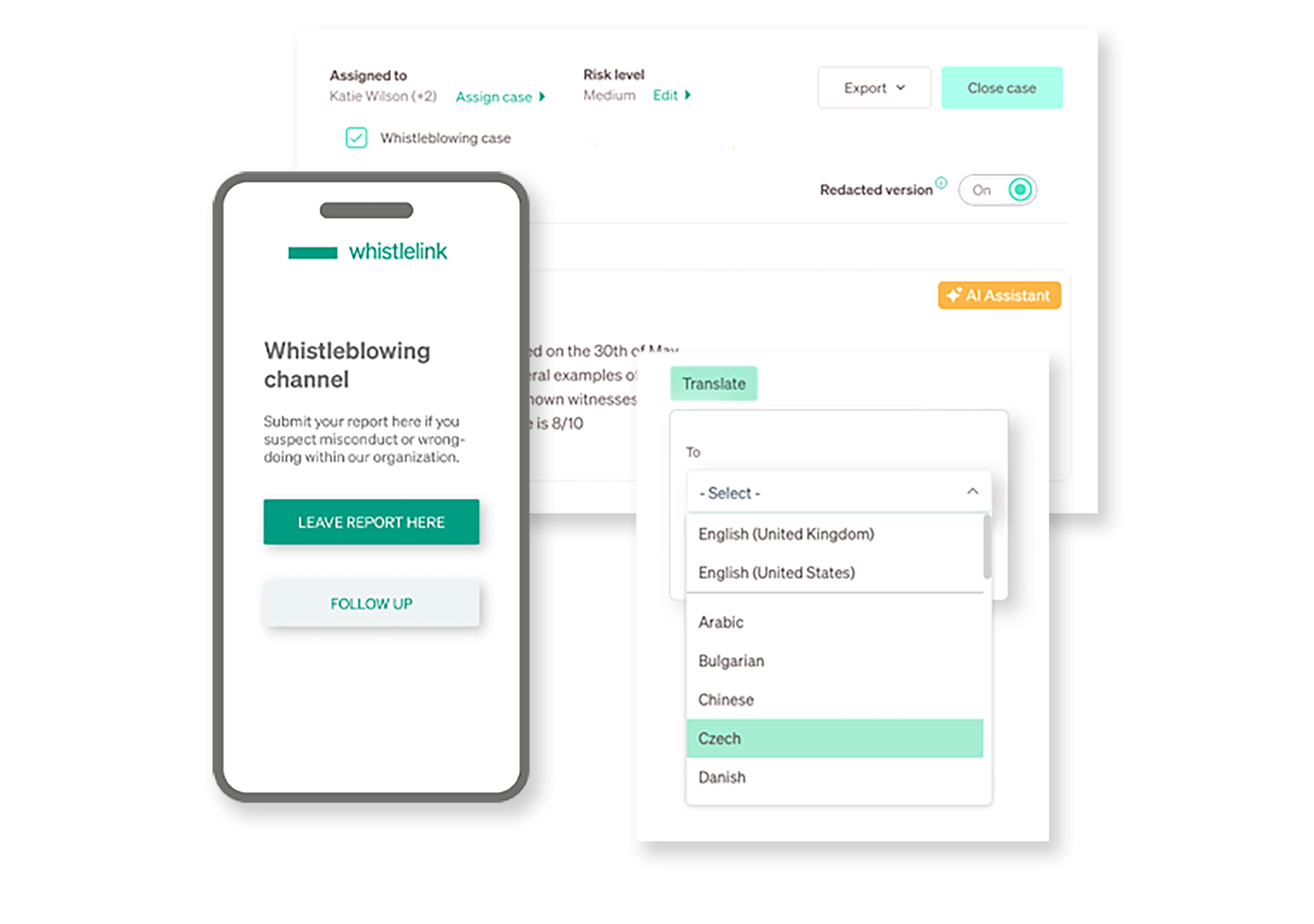
Anonymous reporting
Whistleblowing hotline
Case management
AI assistant
Highest level of security
Giving every voice a safe space
Empower your people to raise ethical concerns with confidence. Always-on, multi-device access creates transparency and trust, while guiding each report to a meaningful resolution.
- Written and oral reporting
- Confidential and anonymous reporting
- 50+ languages
- Encrypted communication
Manage with ease
Simplify daily work with a customisable platform. Manage cases, collaborate across stakeholders, and resolve issues seamlessly in one place.
- AI assistant
- Machine translation
- Fully customisable
- ISO 27001-certified company
Stay ahead of risk
Identify and address potential risks before they escalate, protecting your organisation and strengthening its integrity.
- Clear oversight
- Dynamic dashboards
- Powerful analytics
- Export of management reports
"Whistlelink provides the highest level of security and trust, ensuring
complete confidentiality and compliance in whistleblowing."
Annelie Demred
VP, STRATEGY AND GROWTH
Whistleblowing solutions
Why is whistleblowing important?
Whistleblowing occurs when someone reports illegal, unethical, or harmful activities, typically within a workplace. If misconduct goes unreported, it can lead to serious consequences for an organisation, individuals, or even society as a whole.
A secure internal reporting channel such as a whistleblower system provides a safe and confidential way for people to speak up, ensuring that wrongdoing is addressed before it causes further harm.
What is a whistleblower system?
A whistleblower system is a secure and structured way for individuals to report misconduct, ensuring that concerns are handled professionally and ethically. Depending on the system, reports can be submitted anonymously, helping to protect the whistleblower’s identity and build trust.

Common types of whistleblower systems include:
- Physical or virtual mailboxes
- Telephone hotline or messaging systems
- Digital platforms offering secure, confidential submissions and case management
Why should organisations implement a whistleblower system?
Implementing a whistleblower system helps organisations prevent serious harm, reduce financial and reputational risks, and foster a culture of trust and accountability.
A secure reporting channel allows employees and stakeholders to confidentially raise concerns, ensuring that misconduct is addressed promptly and discreetly before it escalates. This not only protects the organisation but also strengthens employee confidence and reinforces ethical business practices.